

Compressed Air Dryer
A compressed air dryer removes moisture from compressed air before it reaches downstream equipment. Dry, clean air prevents corrosion, contamination, freezing, and damage to pneumatic tools and systems.
Why You Need a Compressed Air Dryer
When air is compressed, its moisture content increases significantly. Without proper drying, serious problems arise across your equipment and products.
Main Types of Compressed Air Dryers
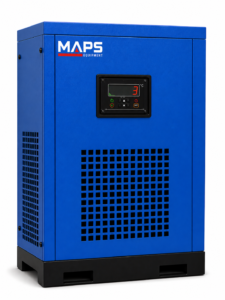
Refrigerant Air Dryer
A Refrigerant Air Dryer (also called a refrigerated compressed air dryer) removes moisture from compressed air by cooling it so water vapor condenses and can be drained away. It is the most common dryer used in general industrial applications.
How It Works
- Hot, moist compressed air enters the dryer.
- Air passes through a heat exchanger and is cooled by refrigerant.
- Temperature drops to about +3°C (37°F pressure dew point).
- Moisture condenses into liquid.
- A moisture separator and automatic drain remove the water.
- Dry air exits the system.
Main Components
- Air-to-air heat exchanger
- Refrigeration compressor
- Refrigerant evaporator
- Moisture separator
- Automatic condensate drain
- Controller (for temperature & alarms)
Desiccant (Adsorption) Air Dryer
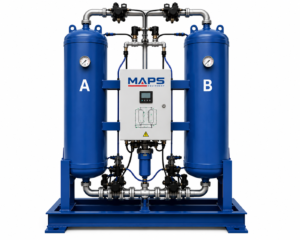
A Desiccant (Adsorption) Air Dryer removes moisture from compressed air using a drying material (desiccant) that adsorbs water vapor onto its surface. It is used when very low dew points are required.
How It Works
- Wet compressed air enters a tower filled with desiccant material (e.g., activated alumina, silica gel, molecular sieve).
- Moisture is adsorbed onto the desiccant surface.
- Dry air exits the dryer.
- While one tower dries air, the other tower regenerates (removes collected moisture).
- The towers automatically switch in cycles.
Achievable Dew Points
This is why desiccant dryers are often called Twin Tower Dryers.
Compressed Air Filter
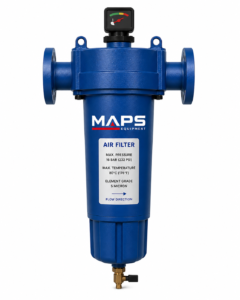
A Compressed Air Filter removes contaminants such as dust, oil, water droplets, aerosols, and vapor from compressed air. Proper filtration protects equipment, improves product quality, and helps meet air quality standards like ISO 8573-1.
Compressed Air Can Contain
- Solid particles (rust, dust, pipe scale)
- Water (liquid & vapor)
- Oil (aerosol & vapor)
- Microorganisms (in sensitive industries)
Without Proper Filtration
- Pneumatic tools wear out faster
- Valves and cylinders fail
- Product contamination occurs
- Maintenance costs increase
Typical Filter Arrangement (Best Practice)
Particulate Filter
Removes solid particles such as dust, rust, and debris from the compressed air stream.
Coalescing Filter
Removes fine oil aerosols and water droplets, making the air cleaner for sensitive applications.
Activated Carbon Filter
Removes oil vapor and odors from compressed air, essential for food, pharma, and breathing air systems.
Interested in Dryer & Filters?
Contact our team for specifications, pricing, and availability.