

Main Types of Chillers
Chillers are broadly categorised by how they reject heat. Choose the right type for your site conditions and load requirements.
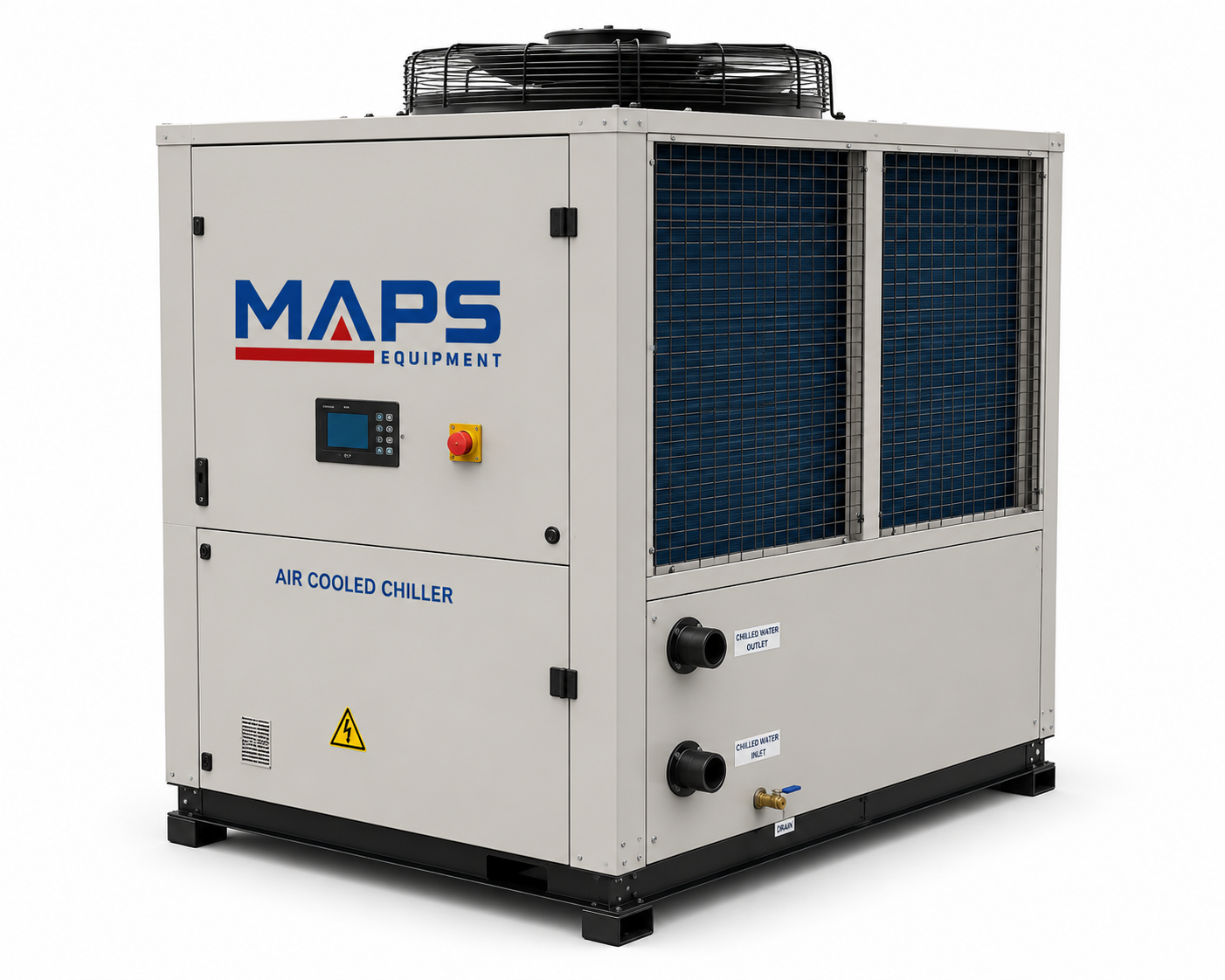
Air-Cooled Chiller
An air-cooled chiller rejects heat directly to the ambient air through a finned condenser coil and fans — no cooling tower or condenser water circuit is needed. Ideal for sites where water availability is limited.
Widely used in HVAC systems and industrial process cooling, especially in locations with restricted water supply.
Main Components
How It Works — Step by Step
-
1
Compressor — Compresses refrigerant, raising pressure and temperature.
-
2
Air-Cooled Condenser — Fans blow ambient air over finned condenser coils to remove heat from the refrigerant.
-
3
Expansion Valve — Reduces refrigerant pressure, cooling it rapidly before it enters the evaporator.
-
4
Evaporator — Chilled water absorbs heat from the process or conditioned space.
-
5
Distribution — Chilled water circulates back to equipment or air handling units, completing the loop.
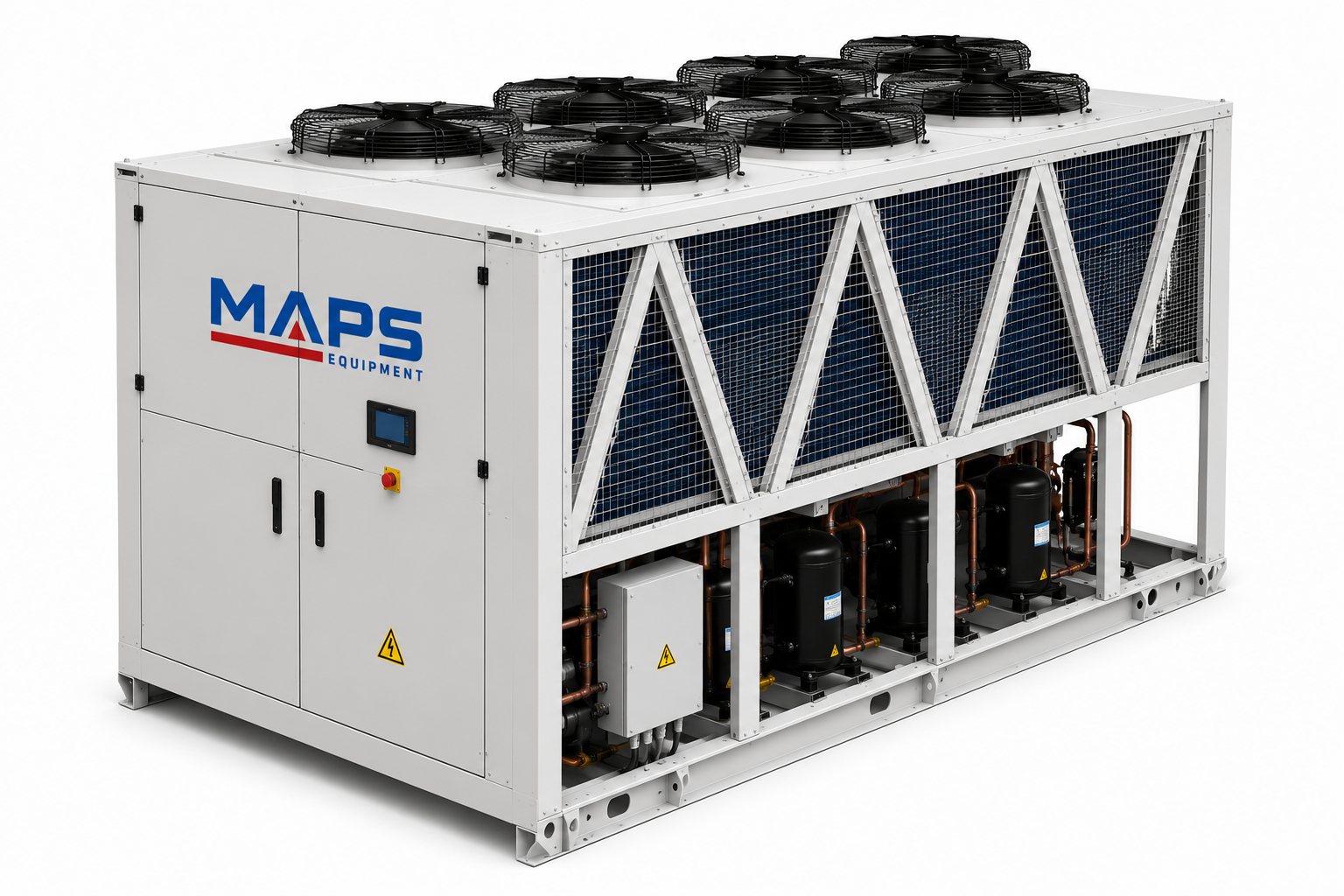
Water-Cooled Chiller
A water-cooled chiller rejects heat to water, which is then cooled in a separate cooling tower. These are the preferred choice for large commercial buildings and industrial facilities due to their superior energy efficiency.
More energy-efficient than air-cooled chillers, especially for high-capacity or continuous-run systems.
Main Components
How It Works — Step by Step
-
1
Compressor — Compresses the refrigerant, raising pressure and temperature.
-
2
Water-Cooled Condenser — Hot refrigerant passes through tubes; condenser water absorbs the heat.
-
3
Expansion Valve — Lowers refrigerant pressure and temperature before the evaporator stage.
-
4
Evaporator — Chilled water absorbs heat from the process or building.
-
5
Cooling Tower — Removes heat from the condenser water before it recirculates back to the chiller.
What Is a Chiller?
A chiller is a machine that removes heat from a liquid — usually water — and transfers it elsewhere, typically to the atmosphere. The cooled water is then circulated to cool equipment, air, or processes.
How a Chiller Works
Chillers operate on the basic vapor-compression cycle — a repeating four-stage process that moves heat from where it's not wanted to the outside environment.
Compressor
Compresses refrigerant gas, raising pressure and temperature to prepare it for heat rejection.
Condenser
Rejects heat to air or water; the refrigerant releases heat and becomes a high-pressure liquid.
Expansion Valve
Reduces refrigerant pressure, causing it to cool rapidly before entering the evaporator.
Evaporator
Absorbs heat from the process water — chilled water is produced and the cycle repeats.
Air-Cooled vs Water-Cooled
Not sure which type suits your project? Here's a quick comparison of the key differences.
Air-Cooled
Water-Cooled
Interested in Chiller?
Contact our team for specifications, pricing, and availability.